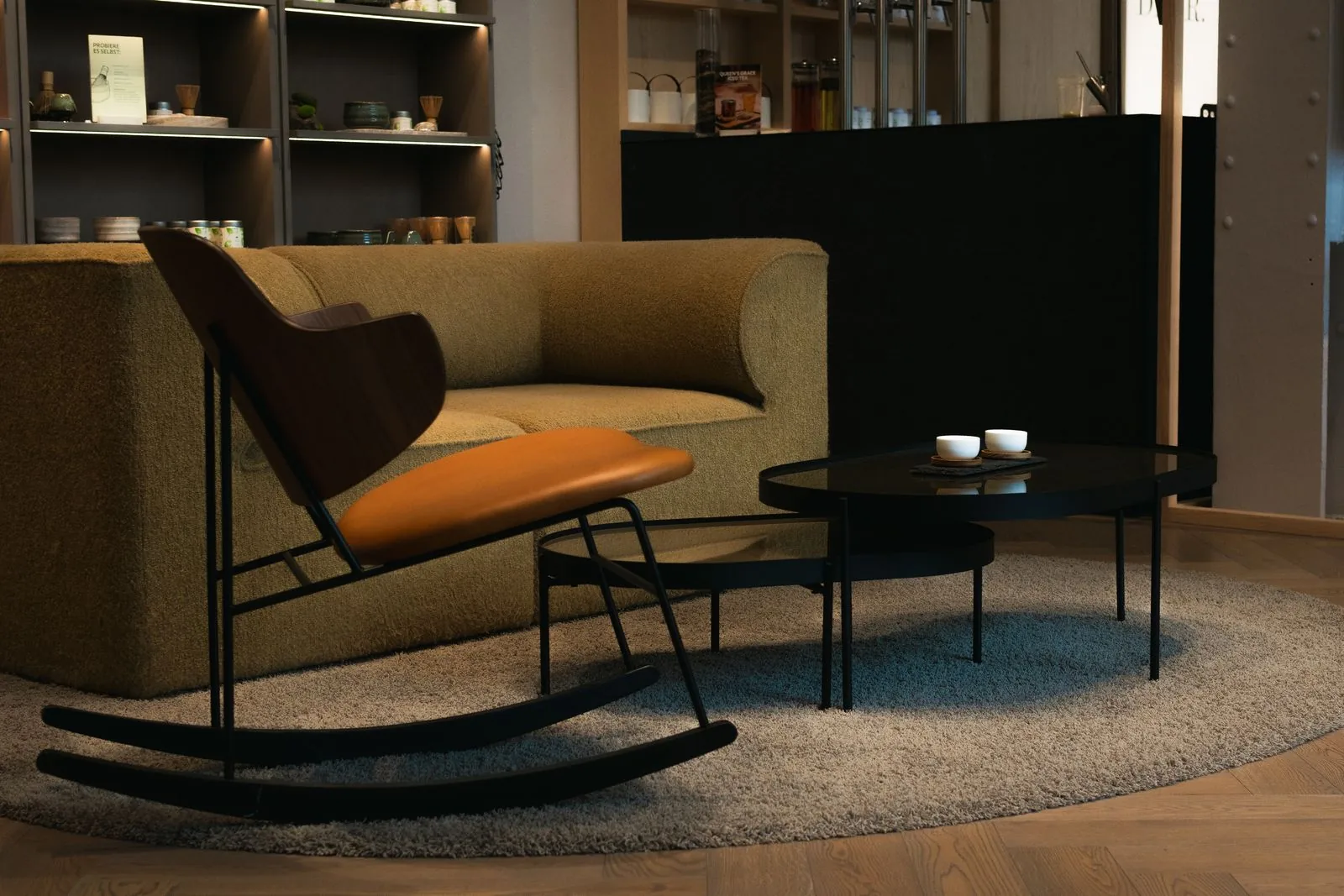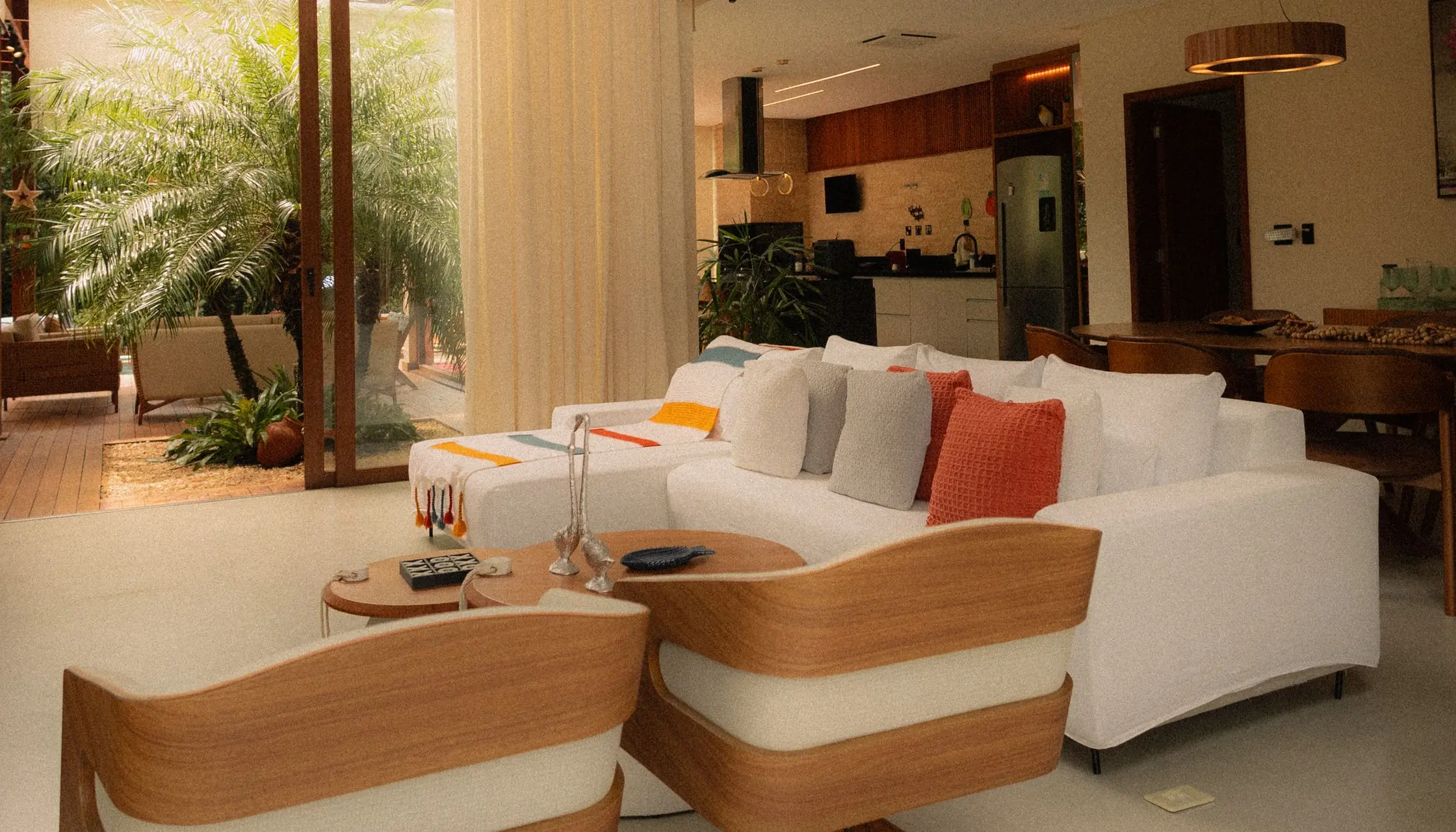
A bright ceiling is only one way to light a room. Work from the activities that continue when the daylight fades.
Draw the evening routine
Place a dot on the plan for each activity that happens after dinner. Someone might read on the sofa, fold laundry near the window or walk through with a sleeping child. Each dot needs a different quality of light. This exercise is a better starting point than evenly spacing downlights across an empty ceiling plan.
Look at the light from your seat
A pendant that looks beautifully shielded when standing may show a bare bulb from a low armchair. Test the view from the sofa, the floor and the entrance. For reading, direct light over the shoulder onto the page. For conversation, a lamp aimed at a nearby pale wall can give faces a softer, more comfortable light.
Give each layer a switch
Separate the lights used for cleaning from the lamps used for relaxing. Decide where the last person leaving the room should turn them off. When using dimmers, confirm compatibility with the chosen lamps and test their lowest comfortable setting. An evening lighting plan succeeds when the right scene takes one simple action to reach.