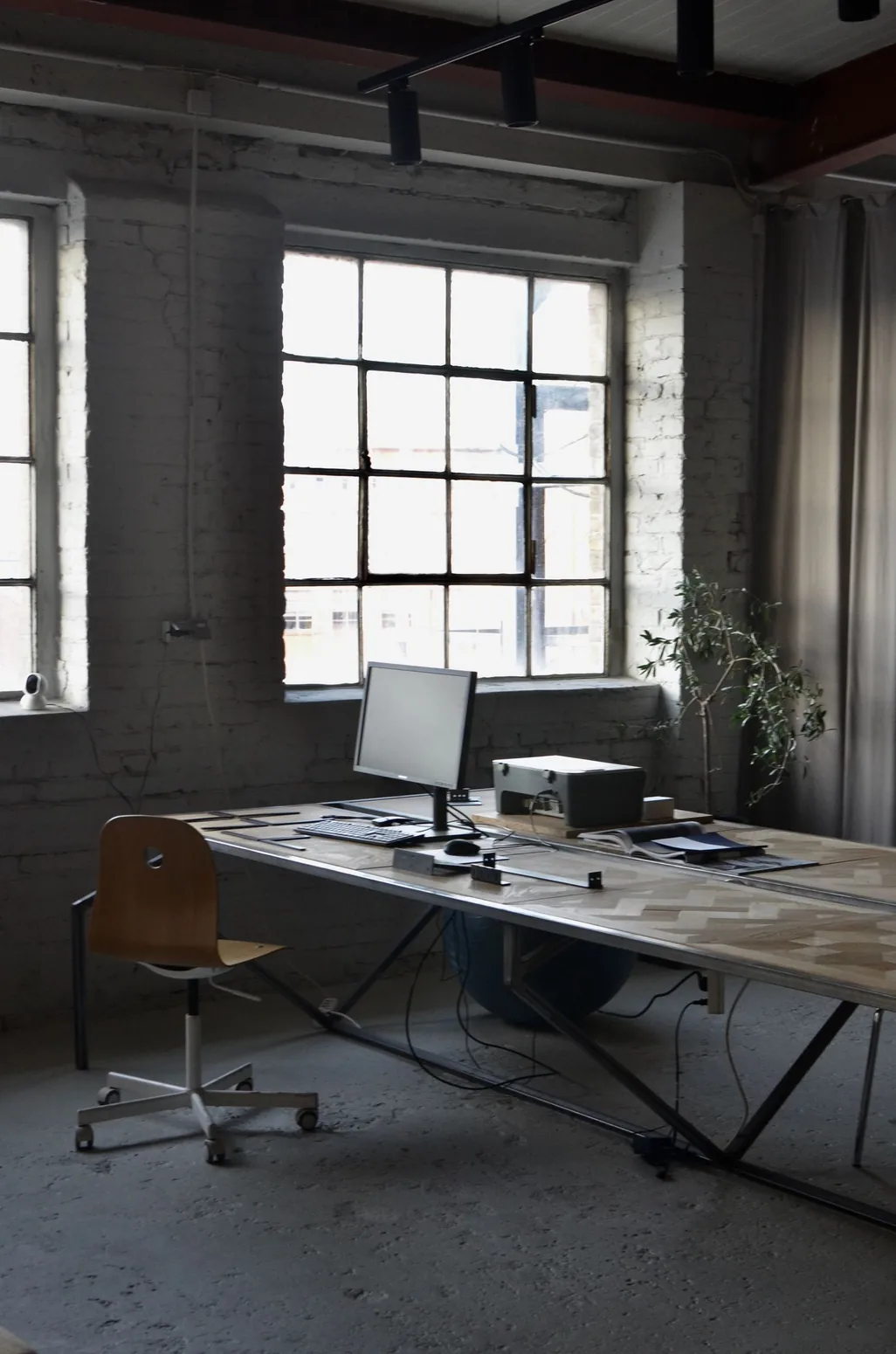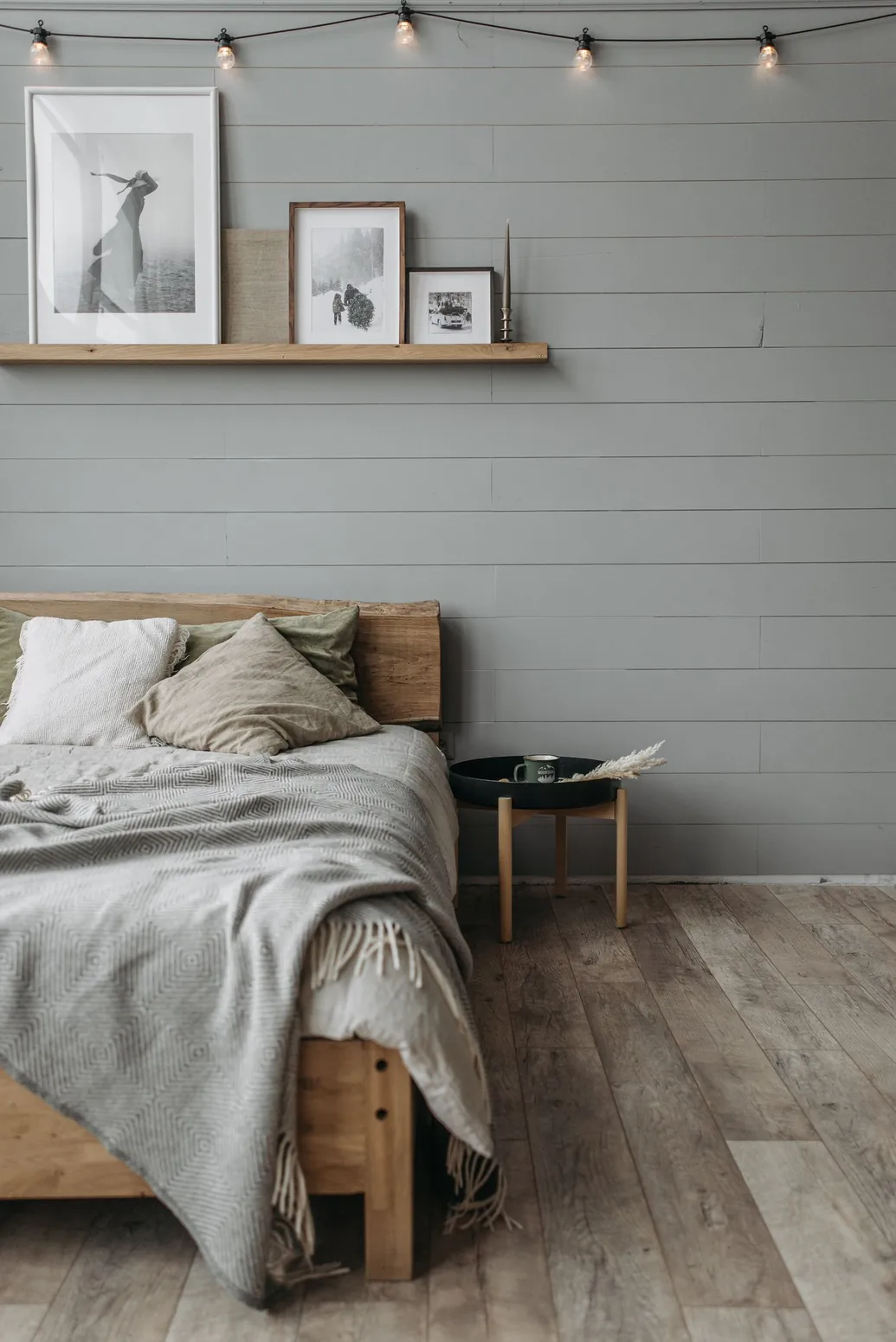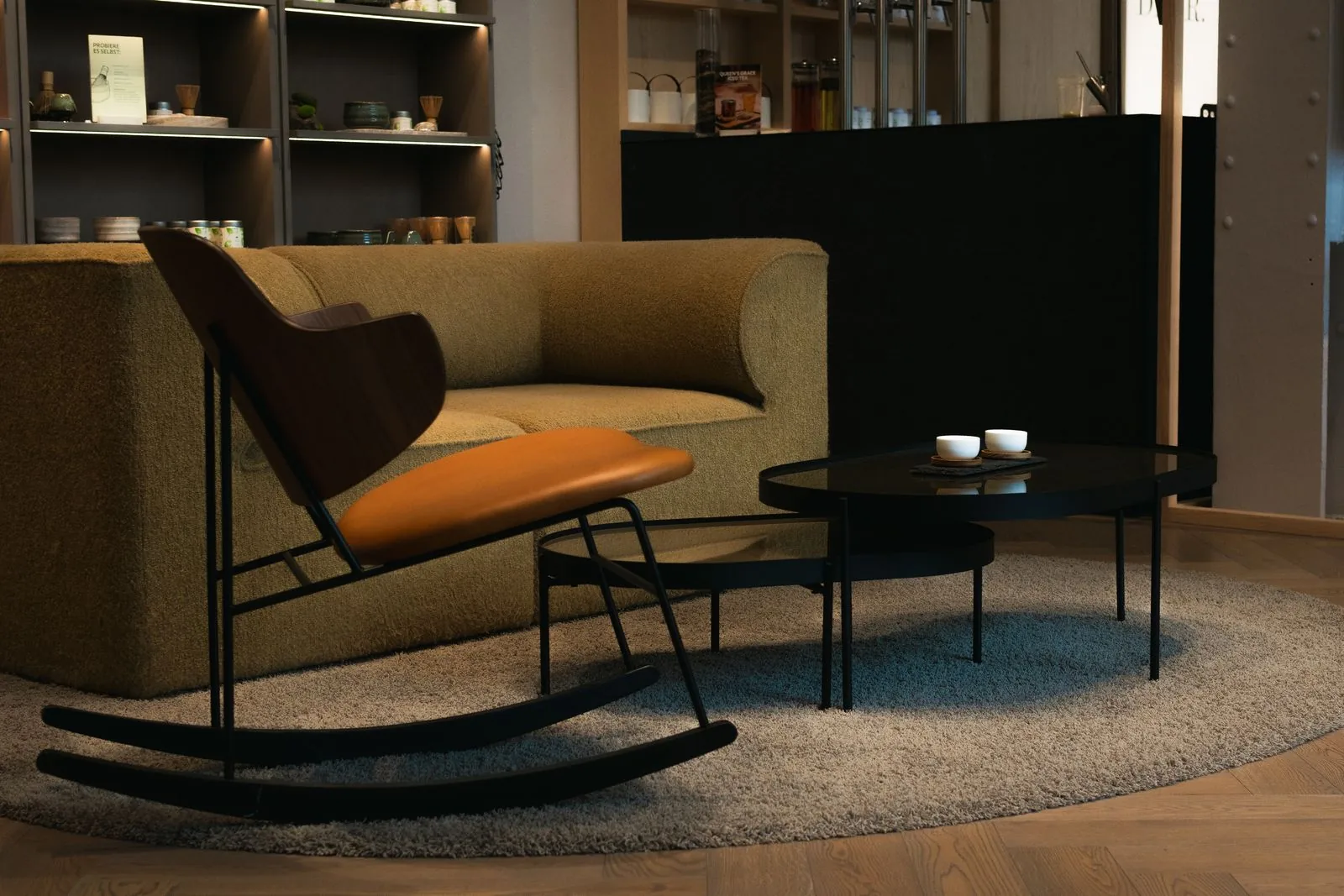
The most interesting neutral rooms reveal themselves slowly. Start with light, then let texture set the pace.
Read the room in daylight
Take the same three paint samples to the window, the wall behind the sofa and the corner furthest from natural light. A cream that looks soft at the window can turn yellow beside warm timber. Leave the samples in place for a day and look again with the evening lights on. The best starting colour is one you enjoy in the room you actually use.
Give texture a job
When the colours sit close together, the hand notices what the eye almost misses. Put a smooth table beside a coarsely woven seat or a matt wall behind a polished reading lamp. You only need a few changes of surface. Repeating one timber tone across two places is often enough to hold the room together.
Leave a place for contrast
Choose one point of contrast at eye level from your usual seat. It could be the dark spine of a book, an old picture frame or a green canopy beyond the glass. Move it around before buying something new. A quiet room feels more personal when its strongest accent already means something to you.